
How Many Restrooms Does a Race Need?
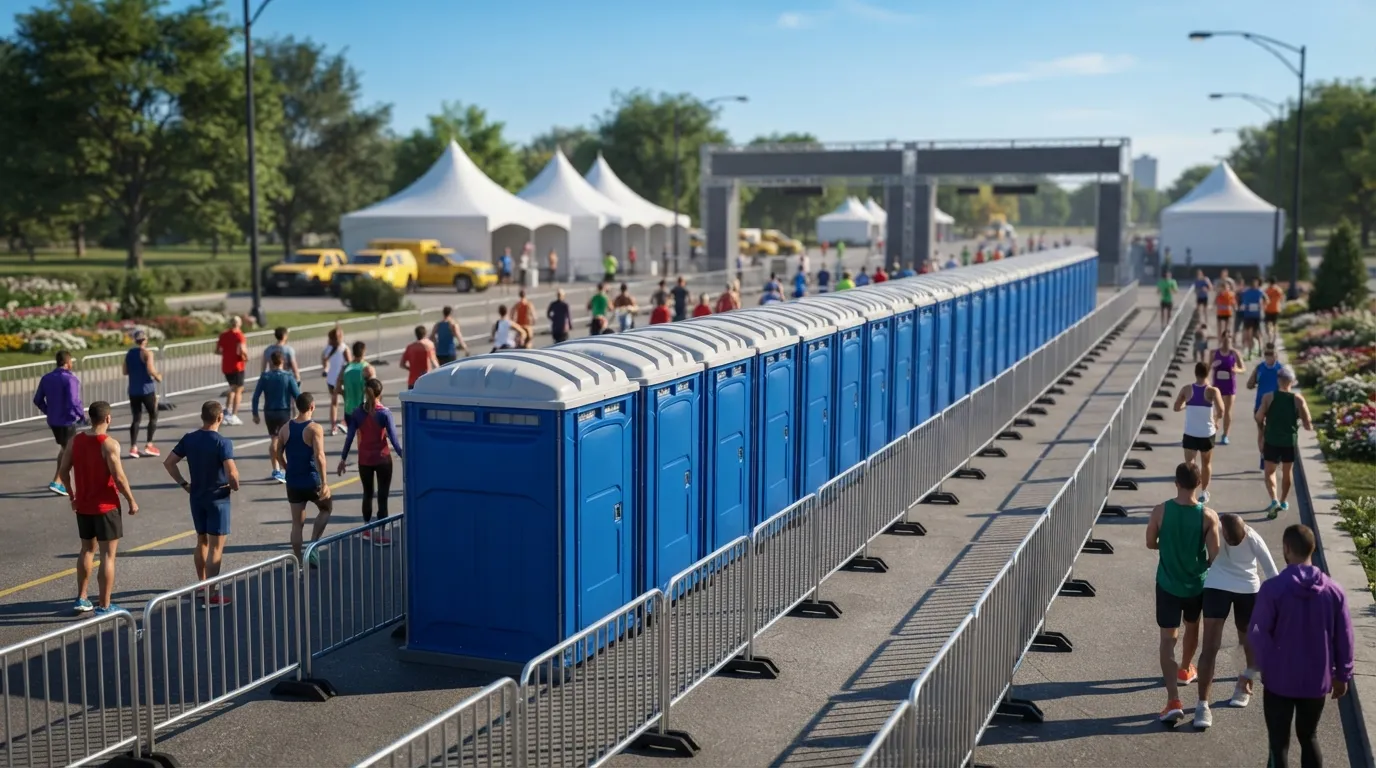
Runner count drives the number, but course shape matters just as much. A looped 5K with one central hub needs fewer total units than a point-to-point half marathon with restrooms staged at three or four rest stops along the route. OSHA 1926.51(c) sets ratios for job sites, not races, but it's still the closest published benchmark event planners use to translate headcount into fixture count: 1 toilet for 20 people scales up from there. For a typical road race, that means clustering standard porta potty rental units at the start/finish and spacing smaller groups at aid stations. ADA Standards section 213.2 requires at least 5 percent of any cluster of single-user units to be accessible, and never fewer than one, so a bank of 10 units needs at least one ADA accessible porta potty. Spectator zones and post-race food areas add separate demand. If your race includes a beer garden or awards tent, treat that as its own crowd count rather than folding it into runner totals. For weddings and other single-site gatherings the math is simpler; racing is messier because people move. Use our how many porta potties do i need guide to work through the specific split between start line, course stops and finish festival. We also handle event restroom rental logistics for the finish line party separately from the running route itself, since foot traffic patterns differ completely between the two.
What Should Be Staged at Each Aid Station?
Aid stations along the course need fewer units but faster service turnarounds than a stationary festival footprint. A single standard unit with a 60 to 70 gallon holding tank handles a steady trickle of runners passing through over a few hours, but if your race spans a full weekend with a Friday shakeout run and Saturday main event, that tank needs a mid-event service visit. ANSI/PSAI Z4.3 sets a baseline weekly service interval for light use, but race day traffic concentrated into a few hours moves faster than that baseline assumes, so we service aid stations same-day for larger fields. Placement matters too: units need roughly 44 by 48 inches of level ground and a path a wheelchair user could actually navigate, since ADA Standards section 405.2 caps ramp slope at 1:12 and section 403.5.1 calls for a 36 inch clear route. Courses through Frederick often cross uneven shoulders or gravel pull-offs, so we walk the route with race directors ahead of time. If your event also needs power at a timing tent or finish arch, our crews can advise on how to brace a temporary power pole so it stays upright through wind and foot traffic near the corral; pair that with our temporary power pole service if lighting or timing equipment needs it. For overnight staging before a dawn start, light tower rental covers the setup crew working before sunrise.
When Should Race Restrooms Be Delivered and Picked Up?
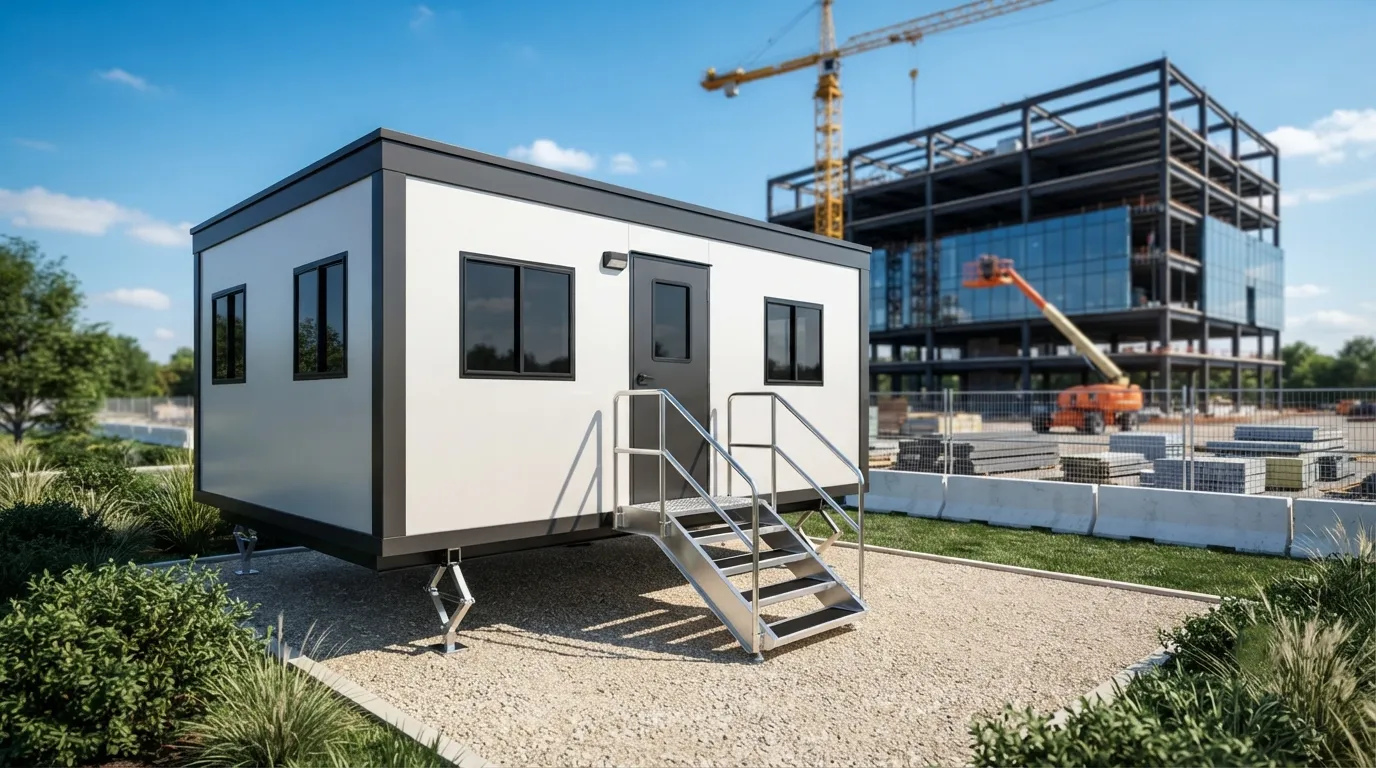
Delivery should land the evening before or early morning of race day, and pickup happens once the last aid station closes, not right after the winner crosses the line. Course routes near Braddock Heights, 5.8 miles west of central Frederick, or out toward Ballenger Creek, 6.2 miles south, mean our trucks are already routing through those corridors regularly, which keeps delivery windows tight. A finish line festival with vendors and a beer garden often runs hours past the actual race, so we schedule pickup around the festival teardown, not the timing clock. Standard units rent for single days when the whole event wraps quickly; check current porta potty rental cost figures before locking a headcount. For multi-day expos or a Friday-to-Sunday race weekend, our porta potty rental per day breakdown shows how the math shifts. Courses that finish downtown sometimes need temporary fence rental or crowd control barrier rental to manage the chute, and larger festivals benefit from a restroom trailer rental for VIP or elite athlete use near the finish stage.
| unit | duration | low | typical | high |
|---|---|---|---|---|
| standard | day | 100 | 150 | 350 |
| standard | event | 200 | 400 | 800 |
| ada | day | 200 | 230 | 400 |
How far in advance should we book restrooms for a race?
Book as soon as the course and headcount are set, ideally 4 to 6 weeks out for anything over a few hundred runners. Spring races booked against wedding season units fill fast. Larger fields need more lead time to secure enough portable toilet rental inventory and ADA units.
Can restrooms be placed along a closed public road?
Yes, but road closures and right-of-way placement need confirming with Frederick city departments before delivery. Rules differ by street and event permit. Check our porta potty permit requirements page before finalizing your course map.
Do we need handwashing stations separate from toilets?
Yes for aid stations serving food or gel handouts. 29 CFR 1910.141(d)(2) requires soap and towels or a hand drying device at washing facilities; sanitizer alone doesn't satisfy that. See handwashing station rental for aid station setups.
What happens if our race runs long or gets delayed?
Call us and we'll adjust pickup. Weather delays and rolling cutoffs push finish times later than planned. Our emergency porta potty rental line covers same-day additions if a late surge of walkers needs more units than planned.
How is a race different from a festival for restroom planning?
A race spreads restrooms along a moving course; a festival concentrates them at one fixed footprint. Races need multiple small aid station clusters. Compare with our festival restroom rental and concert restroom rental pages for stationary event math.
Next step
Get a delivery date
Tell us the address, the dates and the headcount. We size the order and confirm the route.